
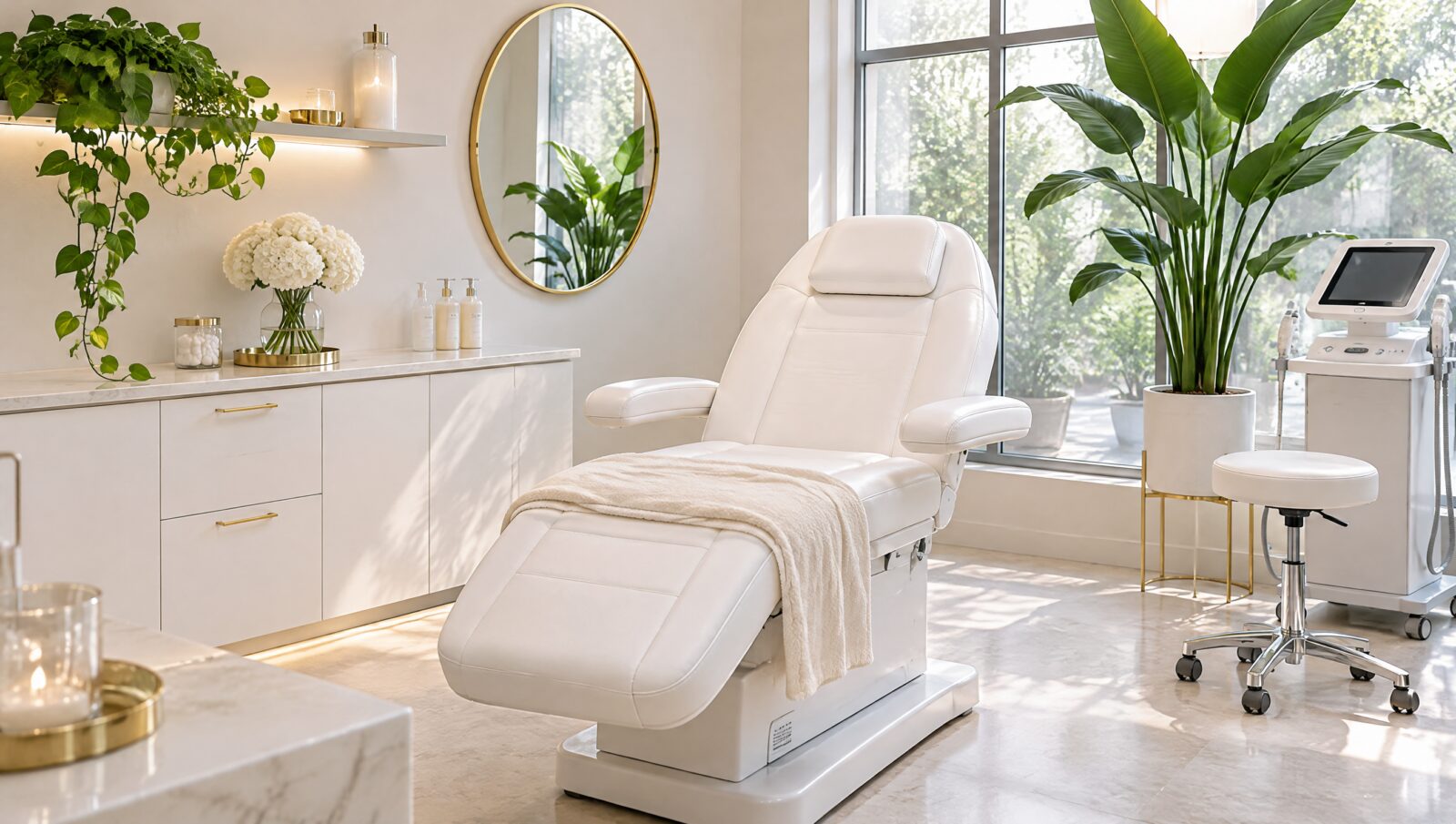
Med Spa Website Design: What Your Site Needs to Book More Consultations
Good med spa website design does one job: it turns a local search for “Botox near me” or “laser hair removal” into a booked consultation. Pretty photos help, but they don’t do that job on their own. Clear treatment pages, visible provider credentials, easy online booking and careful handling of patient data do.
The competition is real. The American Med Spa Association (AmSpa) puts the US medical spa industry at more than $17 billion in revenue, growing by more than $1 billion a year (AmSpa). Citing AmSpa’s 2024 report, an October 2026 Stacker piece says the number of US med spas rose from 8,899 to 10,488 in 2023, about one new location every 5.5 hours, with average revenue of $1.4 million per location (Stacker / Skin Clique Academy). The same piece cites a 2026 Aesthetic Surgery Journal report projecting about 13,000 med spas by the end of 2026.
More clinics means more choice for patients, and they make that choice online. This guide covers the 12 things a med spa site needs, the privacy and advertising rules that catch owners out, and what a site should cost.
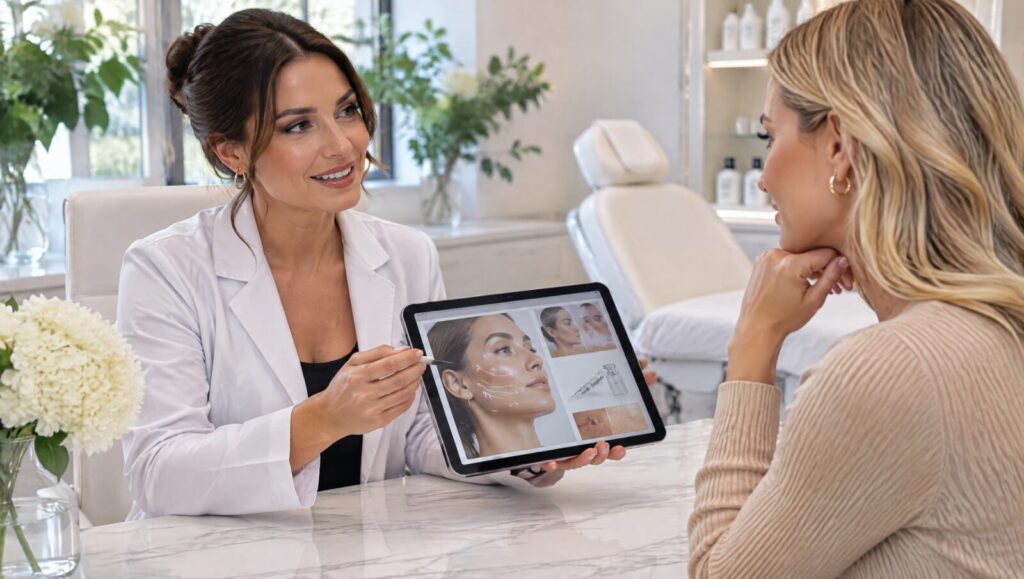
12 must-haves for a med spa website
1. A homepage that answers three questions fast
A visitor should know within seconds what you offer, where you are, and how to book. Put your city and top treatments in the main headline, a “Book a consultation” button above the fold, and your phone number in the header. Leave the slow-loading video slider out of the first screen.
2. One page per treatment
Patients search for treatments, not for “med spa.” Give each service its own page: injectables, dermal fillers, laser hair removal, chemical peels, microneedling, body contouring, IV therapy, whatever you offer. Each page should explain who it suits, what a visit involves, downtime, how many sessions are typical, the provider who performs it, and price guidance. One long “Services” page can’t rank for all of those searches.
3. Provider bios with real credentials
Aesthetic treatments are medical procedures, so patients want to know who is holding the needle. List each provider’s name, license type (MD, NP, PA, RN), training, years of experience and the treatments they perform. Name your medical director if your state requires one. Real headshots beat stock photos every time.
4. Online booking that works on a phone
Plenty of patients browse treatments on their phones after hours. Let them pick a treatment, provider and time without calling. Embed your booking system (Boulevard, Vagaro, Zenoti, Mangomint or similar) or link to it from every treatment page. Keep a short consultation request form as a backup. Our contact page guide covers form length and placement.

5. Transparent pricing or “starting at” ranges
You don’t have to publish every price, but “call for pricing” on every page sends shoppers to the clinic that does show numbers. “Starting at” prices, per-unit pricing for neurotoxins, or package ranges set expectations and filter out poor-fit leads. Mention financing options if you offer them.
6. Before-and-after photos handled properly
Results galleries are often the most-viewed pages on a med spa site. Use only your own patients’ photos, with written consent for website use. Keep lighting, angle and framing consistent, label the treatment and number of sessions, and don’t edit the “after” shots. See the rules section below for the advertising side.
7. Reviews and testimonials
BrightLocal’s 2026 Local Consumer Review Survey found 97% of consumers read reviews for local businesses, 74% focus on reviews from the last three months, and 31% won’t consider a business under 4.5 stars (BrightLocal). Show recent Google reviews on your homepage and treatment pages, and keep new ones coming with a steady ask after each visit. Our guides on getting more Google reviews and website testimonials cover how.
8. Local SEO built in
Google ranks local results mainly on relevance, distance and prominence (Google Business Profile Help). Your site supports all three: your name, address and phone number match your Google Business Profile, treatment pages mention your city naturally, and you have a page for each location if you run more than one. Add MedicalBusiness or MedicalClinic structured data with your address, hours and phone.
9. A clean, calm design that still converts
Med spa branding leans toward soft colors, white space and elegant type. That’s fine, as long as buttons stand out and text stays readable. Thin, light-gray type on a cream background looks luxurious and fails contrast checks. Our ADA compliance checklist lists the contrast and accessibility basics.
10. Fast load times
High-resolution gallery images are the usual culprit for slow med spa sites. Compress photos, serve modern formats like WebP, lazy-load galleries, and avoid autoplay hero videos on mobile. A visitor who waits five seconds on a phone often goes back to the search results.
11. Memberships, packages and gift cards
Many med spas earn steady revenue from monthly memberships and treatment packages. Give them a dedicated page that explains what’s included, the monthly cost and how to cancel. A gift card page also pays off before Mother’s Day and the holidays.
12. A privacy policy and patient-data plan
Intake forms, booking tools and tracking pixels all touch personal, sometimes health-related, information. Your site needs a clear privacy policy and a plan for where form data goes. The next section explains why this matters more for a med spa than for most local businesses.
The rules med spa websites need to get right
This section is general information, not legal advice. Rules vary by state and by how your practice is set up, so check specifics with a healthcare attorney.
Tracking pixels and patient data
If your practice is a HIPAA covered entity, the US Department of Health and Human Services (HHS) says you may not use tracking technologies “in a manner that would result in impermissible disclosures of PHI to tracking technology vendors” (HHS OCR guidance). Tracking technologies include cookies, tracking pixels, session replay scripts and fingerprinting scripts.
The guidance says trackers on logged-in pages, such as a patient portal, generally have access to protected health information. It also says trackers on public pages that let people book appointments may have access to it in some cases. An email address or a reason for seeking care typed into a booking form is an example. HHS adds that a cookie banner “do[es] not constitute a valid HIPAA authorization.”
In June 2024, a federal court in Texas (AHA v. Becerra) vacated part of that guidance: the part saying HIPAA is triggered when a tracker simply links a visitor’s IP address to a public page about a health condition or provider. The rules for logged-in pages and booking tools were not described as vacated.
In practice, ask whoever builds your site:
- Which scripts (Meta Pixel, Google Analytics, TikTok, heatmaps) load on booking, intake and contact pages?
- Where do form submissions go, and does that vendor sign a business associate agreement (BAA) if you need one?
- Can ad and analytics tags be kept off pages where people describe a health concern?
Whether HIPAA applies to your med spa depends on things like whether you bill health plans electronically. Ask your attorney rather than assuming either way.
Treatment claims
The Federal Trade Commission’s Health Products Compliance Guidance says “Advertising must be truthful and not misleading,” and health benefit claims need “competent and reliable scientific evidence” (FTC). It also says patient anecdotes are “never sufficient” to substantiate claims about a health product’s effects. So skip phrases like “guaranteed results,” “painless” or “permanent” unless you can back them up, and describe what a treatment is and does in plain, accurate terms.
Before-and-after photos and testimonials
The same FTC guidance treats testimonials as advertising claims. If a photo or review shows results most patients won’t get, a small “results not typical” note may not fix the problem. Show a representative range, note the number of sessions, and avoid filters or retouching. Many state medical boards have their own advertising rules too, so check yours.
Google Ads and prescription drug names
Neurotoxins and many fillers are prescription products. Google Ads says US advertisers don’t need certification to use prescription drug terms in ads and landing pages, but “you must be certified in order to keyword-target these terms” (Google Ads policy). If you plan to bid on brand-name treatment keywords, sort out certification before you build the landing page.
What a med spa website costs and how to choose a designer
A med spa site usually costs more than a basic brochure site because of the treatment pages, galleries and booking integration. Our website cost guide breaks down typical price ranges. As a reference point, Crazy Media Design builds 5-page sites from $750, typically in about two weeks, with unlimited revisions. Larger med spa sites with a page per treatment cost more.
When you compare designers, ask:
- Have you built sites for medical or aesthetic practices? Can I see them?
- Which booking platforms have you integrated, and will mine work?
- Which tracking scripts will you install, and on which pages?
- Where do form submissions go, and who can see them?
- Will I own the domain, the site files and the content?
- Who updates plugins and security after launch? (See our website maintenance plans.)
If you run a dental or chiropractic practice too, our guides to dental website design and chiropractor website design cover the same ground for those fields.
Frequently asked questions
What pages does a med spa website need?
At minimum: a homepage, one page per treatment, provider bios, a results gallery, pricing or memberships, reviews, a contact and booking page, and a privacy policy. Multi-location practices need a page for each location.
Should a med spa website show prices?
Showing “starting at” prices or per-unit pricing helps most practices. It sets expectations, and price shoppers are less likely to bounce to a competitor that does list prices.
Can I use before-and-after photos on my website?
Yes, if they are your own patients’ photos, taken with written consent for website use and not retouched. The FTC treats them as advertising, so they should reflect results patients can typically expect. Check your state medical board’s advertising rules too.
Do Meta Pixel and Google Analytics cause HIPAA problems for med spas?
They can if your practice is a HIPAA covered entity and the tags send patient information to those vendors. HHS guidance focuses on logged-in pages and booking or intake tools. Ask a healthcare attorney whether HIPAA applies to you, and keep ad tags off pages where patients enter health details.
How long does it take to build a med spa website?
A small site can launch in about two weeks once content and photos are ready. A larger site with many treatment pages and a booking integration takes longer. See how long it takes to build a website.
What’s the best platform for a med spa website?
WordPress gives you the most control over treatment pages, SEO and booking integrations. Hosted builders like Wix or Squarespace are simpler but more limited. What matters most is that the site loads fast, books easily and you own it.
Get a free med spa homepage design
Want to see what your med spa’s site could look like before you spend anything? We’ll design your new homepage for free. No obligation. Don’t love it? You don’t pay a thing.
Sources
- American Med Spa Association: Medical Spa State of the Industry Report (page modified Apr 22, 2026)
- Stacker / Skin Clique Academy: More med spas than McDonald’s? 2027 forecasts say yes (Oct 12, 2026; cites AmSpa 2024 report and Aesthetic Surgery Journal 2026)
- HHS OCR: Use of Online Tracking Technologies by HIPAA Covered Entities and Business Associates
- FTC: Health Products Compliance Guidance (December 2022)
- Google Ads: Restricted drug terms
- Google Business Profile Help: Tips to improve your local ranking on Google
- BrightLocal: Local Consumer Review Survey 2026
Need a website that brings in inquiries?
Get a professional website, live in two weeks
We build fast, mobile-friendly websites for local businesses, planned around what you need your website to do. Five pages from $750, with unlimited revisions until you approve.

You’ll talk directly with Govind,
founder of Crazy Media Design.
$750
Five-page website · starting price
- Delivered in two weeks
- Unlimited revisions
- Mobile-friendly and fast
- You own your website